Free calculator
Decomposed Granite Calculator
Use this decomposed granite calculator, also called a DG calculator, to estimate cubic yards, tons, coverage, compaction, waste, and optional bulk cost for a path or patio. Enter the footprint and finished depth, then adjust the compaction allowance and supplier density. The result keeps those assumptions visible because decomposed granite settles more than loose gravel when it is watered and rolled.
Open calculatorEstimateEstimate only; decomposed granite density, compaction, and local conditions vary, so confirm coverage with your supplier and consult a qualified professional for structural or drainage questions.
Project inputs
Estimate
0.92 cubic yards of decomposed granite
A 80 sq ft path or patio at 3 inches deep needs about 0.92 cubic yards, or 1.33 tons, of decomposed granite after compaction and waste.
Order and transport check
Supplier basis0.92 cu yd · 1.33 tons
Bagged optionUse supplier package yield and round to whole units
Pickup or deliveryConfirm vehicle payload, supplier minimums, moisture, and delivery access before ordering.
Printable material list
Estimate- Decomposed granite0.92 cu yd15% compaction and 8% waste included
- Typical bulk cost$37–$87regional planning range; edit the price field for a local rate
- Delivery vs DIY haulAbout 3 pickup loadsroughly 9 wheelbarrow loads to move it; heavy material, so confirm your truck's payload before hauling
- Decomposed granite by weight1.33 tons1.45 tons/cu yd density
- Cost at your price$55.20at $60/cu yd — edit the price field
- Optional stabilizerplan separatelystabilized DG mixes in a binder you add by the bag
- Coverage at 2 inches149 sq ftspread thinner or deeper to change coverage
Estimate only. Decomposed granite compacts and can wash on slopes; subgrade, edging, drainage, and whether you stabilize it change how much you need.
EstimateEstimate only; decomposed granite density, compaction, and local conditions vary, so confirm coverage with your supplier and consult a qualified professional for structural or drainage questions.
Decomposed Granite Calculator quick answers
- 1 cubic yard at 3 in
- About 108 sq ft
- 20 ft x 4 ft path
- About 0.92 cu yd
- Default order weight
- About 1.33 tons
Coverage before compaction allowance and waste.
At 3 inches with the default 15% compaction and 8% waste.
For the default path at 1.45 tons per cubic yard.
Assumptions
- Default depth is 3 inches; the calculator also shows coverage at a 2-inch depth.
- Default decomposed granite density is 1.45 tons per cubic yard.
- A 15 percent compaction allowance and 8 percent waste are added before rounding.
- Optional cost uses your entered bulk price of $60 per cubic yard, not a quote.
Calculation details
- Area = length x width.
- Cubic feet = area x depth in feet.
- Compaction allowance is added before waste because fines pack down.
- Cubic yards = cubic feet / 27; tons = cubic yards x density.
Calculator guideDepth, measuring, formulas, and common mistakes6 practical sections for this material
What this decomposed granite calculator does
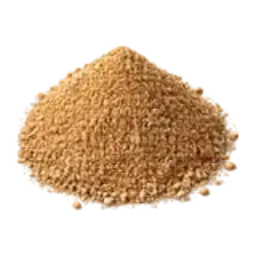
Decomposed granite, often shortened to DG and sometimes labeled crushed granite fines or G3, is finely crushed, partly powdered granite that packs into a firm, natural-looking surface. This calculator turns a measured area and depth into cubic feet, cubic yards, tons, and a coverage figure, with an optional bulk cost. It is built for garden paths, patios, and walkways where you want a stable surface rather than loose stone.
Enter the length, width, and depth, then keep or adjust the compaction allowance, waste, density, and price. The tool adds the compaction allowance because DG loses height as it is rolled and watered in, then adds waste, converts to cubic yards, and multiplies by density for tons. Every assumption stays visible so you can match it to a supplier ticket.
How decomposed granite differs from gravel and crushed stone
DG is neither pea gravel nor a crushed-stone base. Pea gravel is rounded and stays loose, so it rolls underfoot and migrates past edging; for that look, use the pea gravel calculator instead. Angular crushed stone with fines, like crusher run, is built to lock up as a hard base under pavers or a driveway, so the crushed stone calculator fits that job. DG sits between them as a finished walking surface carrying its own fines.
The fines are the point. When DG is spread, lightly watered, and compacted, the small particles knit into a semi-stable path that sheds light foot traffic and reads like a natural trail. It is softer than concrete and firmer than loose gravel. You would not rely on plain DG for a long driveway or a structural base, but for a garden path, patio, or border it gives a clean surface that still drains.
Natural, stabilized, and resin-bound decomposed granite
Plain or natural DG is the loose-but-compactable product priced by the cubic yard or ton, and it is what this calculator estimates by volume. Stabilized DG mixes in a powdered binder, usually added by the bag, that hardens the surface and cuts dust and tracking. Resin-bound DG uses a poured resin to lock the surface into a near-solid, more accessible path. Each step up adds cost and a separate binder or resin line item.
Estimate the granite volume here first, then add any binder or resin from the product label, since coverage rates differ by brand. A common build is 3 to 4 inches of DG over a prepared base, placed and compacted in shallow lifts rather than one deep pour. If you are unsure which version suits your traffic, slope, or accessibility needs, confirm the surface choice with your supplier or a qualified professional.
Formula used
Area equals length times width. Cubic feet equals area times depth in feet, so depth in inches is divided by 12. The calculator then adds the compaction allowance and the waste factor, divides by 27 to get cubic yards, and multiplies cubic yards by density for tons. The optional cost is cubic yards times your bulk price. A coverage figure at a 2-inch depth is also shown so you can compare thinner top-dressing layers.
Worked example with the defaults: a 20 ft by 4 ft path is 80 sq ft. At a 3-inch depth that is 80 times 0.25, or 20 cubic feet. Adding 15 percent compaction gives 23 cubic feet, and adding 8 percent waste gives about 24.84 cubic feet. Divided by 27 that is about 0.92 cubic yards, which at 1.45 tons per cubic yard is about 1.33 tons. At $60 per cubic yard the cost placeholder is about $55.
Edging, slopes, and erosion
Loose, natural DG needs containment. Without solid edging, such as steel, stone, concrete, or a buried header, the fines spread into beds and lawn and the path slowly narrows. On a slope, rain can wash the surface downhill, cutting channels and leaving a coarse, gravelly top. Steeper paths usually call for stabilized or resin-bound DG, a shallower grade, cross-drainage, or steps rather than one long run of plain material.
Plan a slight crown or a cross-slope of roughly two percent so water sheds to the sides instead of pooling or running straight down the path. None of this changes the volume the calculator returns, but it changes how long the surface lasts, so treat edging and drainage as separate line items in your plan.
Common mistakes
The most common mistake is ordering for loose depth and coming up short after compaction. DG settles noticeably when rolled, which is why this calculator adds a compaction allowance on top of waste; setting both to zero leaves a thin, soft path. The second mistake is treating DG as a structural base. It is a walking surface, not a substitute for compacted crusher run under pavers or a driveway.
Other slips include skipping edging, ignoring dust tracked into the house, and laying DG too deep in one pass so it never firms up. Spreading and compacting in two-inch lifts works better than one deep layer. Finally, do not trust a generic density: granite fines vary with moisture and source, so use your supplier's tons-per-yard figure when it is printed.
Decomposed granite coverage per cubic yard by compacted depth
| Compacted depth | Coverage per cu yd | Approx. tons per cu yd |
|---|---|---|
| 1 in | About 324 sq ft | 1.45 |
| 2 in | About 162 sq ft | 1.45 |
| 3 in (default) | About 108 sq ft | 1.45 |
| 4 in | About 81 sq ft | 1.45 |
Coverage is finished, compacted area before waste; order extra for compaction and edge loss. Density of 1.45 tons per cubic yard is a planning default, so use your supplier's figure when listed.
Decomposed Granite Calculator FAQ
How much decomposed granite do I need for a 20 by 4 foot path?
Using the defaults, a 20 ft by 4 ft path at 3 inches deep is 80 square feet and about 20 cubic feet before adjustments. After a 15 percent compaction allowance and 8 percent waste it is roughly 0.92 cubic yards, or about 1.33 tons at 1.45 tons per cubic yard. Confirm density with your supplier before ordering.
How deep should decomposed granite be?
For a path or patio, 3 to 4 inches of DG over a prepared base is a common planning depth, placed and compacted in two-inch lifts. A thin top-dressing of about 2 inches can refresh an existing surface, which is why this calculator also shows coverage at 2 inches. Deeper single pours tend to stay soft.
Why does the calculator add a compaction allowance?
Decomposed granite is spread loose, then watered and rolled, and the fines settle so the finished depth is less than the loose depth. The default 15 percent allowance adds volume so the path still reaches your planned depth after rolling. Loose rounded gravel needs little or none of this, but DG with fines clearly does.
Is decomposed granite the same as pea gravel or crushed stone?
No. Pea gravel is rounded and stays loose, so it works as decorative cover but not a firm surface; use the pea gravel calculator for that. Crushed stone, like crusher run, is an angular base that locks up under pavers and driveways; use the crushed stone calculator there. DG is fine crushed granite that compacts into a walking surface of its own.
What is stabilized decomposed granite?
Stabilized DG mixes a powdered binder into natural decomposed granite so the surface hardens, sheds water better, and produces less dust and tracking. Resin-bound DG goes further with a poured resin for a near-solid path. Estimate the granite volume here, then add the binder or resin separately, since coverage rates differ by brand.
How do I keep decomposed granite from washing away?
Contain the path with solid edging, compact in lifts, and keep slopes gentle with a slight cross-slope so water sheds to the sides. On steeper runs, stabilized or resin-bound DG, cross-drains, or steps hold up far better than plain material. Edging and drainage sit outside the volume estimate, so add them as their own line items.
Does the cost figure reflect local prices?
No. The cost line only multiplies cubic yards by the bulk price you enter, defaulting to $60 per cubic yard. Decomposed granite prices change by region, supplier, color, and delivery, so use it to compare options, then check the current price with a local yard.
Can this size decomposed granite for a round patio or path curve?
Yes. Choose circle in the area shape selector for a round patio or seating area and enter its diameter, or ring for a circular path around a planter or tree. For a triangular infill, pick triangle and enter base and height. The calculator finds that area, then adds compaction and waste before converting to cubic yards and tons.
What does DG mean in landscaping?
DG is shorthand for decomposed granite, the finely crushed, partly powdered granite sold for paths, patios, and borders. Suppliers and landscapers use "DG" and "decomposed granite" interchangeably on price lists and delivery tickets, so a DG calculator and a decomposed granite calculator estimate the same material. This tool uses that DG (decomposed granite) shorthand throughout its results.
How this estimate is built
Formula
- Area = length x width.
- Cubic feet = area x depth in feet.
- Compaction allowance is added before waste because fines pack down.
- Cubic yards = cubic feet / 27; tons = cubic yards x density.
Inputs and assumptions
Editable inputs include Area shape, Length, Width, Diameter, Base, Height, Outer diameter, Inner diameter, Depth, Compaction, Waste, Density, Bulk price. Defaults and calculation assumptions are listed in the Assumptions section and can be replaced with measurements or product-label data.
Sources and testing
Public density, coverage, package, and application references inform the defaults. Automated unit tests cover shared conversions and calculator logic; they do not validate site conditions, supplier labels, or project design.
Limits
Region, moisture, compaction, grading, waste, and supplier specifications can change the amount required. This is a planning estimate, not structural, safety, engineering, or professional construction advice.
Read the calculation methodology and sources and update policy.