Free calculator
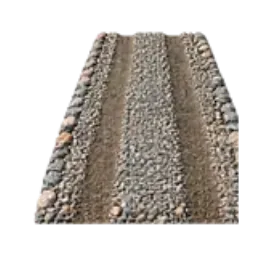
Gravel Driveway Calculator
Use this gravel driveway calculator to turn driveway length, width, total depth, compaction allowance, waste, and density into cubic feet, cubic yards, tons, and an optional bulk cost. It produces a printable material list for planning a layered crushed stone driveway before you order or call a supplier.
Open calculatorEstimateEstimate only; subgrade, drainage, slope, compaction, stone gradation, and local conditions vary. Consult a professional for traffic-load or drainage questions.
Project inputs
Estimate
11.2 cubic yards of driveway gravel
A 480 sq ft driveway at 6 inches deep needs about 11.2 cubic yards, or 15.68 tons, of gravel after compaction and waste.
Order and transport check
Supplier basis11.2 cu yd · 15.68 tons
Bagged optionUse supplier package yield and round to whole units
Pickup or deliveryConfirm vehicle payload, supplier minimums, moisture, and delivery access before ordering.
Printable material list
Estimate- Driveway gravel11.2 cu yd20% compaction and 5% waste included
- Typical bulk cost$280–$672regional planning range; edit the price field for a local rate
- Delivery vs DIY haulAbout 32 pickup loads, so book a deliveryroughly 101 wheelbarrow loads to move it; heavy material, so confirm your truck's payload before hauling
- Gravel by weight15.68 tons1.4 tons/cu yd density
- Cost at your price$504.00at $45/cu yd — edit the price field
- Base and top layersplan separatelya coarse base under a finer top performs better
Estimate only. Driveways usually use layered stone over a prepared subgrade; soil, drainage, and vehicle loads change the right build.
EstimateEstimate only; subgrade, drainage, slope, compaction, stone gradation, and local conditions vary. Consult a professional for traffic-load or drainage questions.
Gravel Driveway Calculator quick answers
- 40 x 12 ft at 6 inches
- 8.89 cu yd before allowances
- Two-inch surface refresh
- 2.96 cu yd before allowances
- Cost result includes
- Entered stone price only
The entered compaction and waste percentages increase the delivered amount; keep total depth tied to the actual layer plan.
Use a shallow depth only when an existing compacted base remains sound. A new driveway needs a separate site-specific layer plan.
Delivery, grading, geotextile, drainage, spreading, taxes, and equipment are separate from the calculator's material placeholder.
Assumptions
- Cubic yards equal cubic feet divided by 27.
- Default total depth is 6 inches across all layers combined.
- Compaction and waste are added on top of the loose volume.
- Default density is about 1.4 tons per cubic yard for crushed stone.
Calculation details
- Area = length x width.
- Cubic feet = area x total depth in feet.
- Compaction allowance is added before waste.
- Cubic yards = cubic feet / 27; tons = cubic yards x density.
Calculator guideDepth, measuring, formulas, and common mistakes6 practical sections for this material
What this gravel driveway calculator does
A gravel driveway is usually built in layers, not as one scoop of stone. This calculator takes your driveway length, width, total depth, density, compaction allowance, and waste, then converts the same volume into cubic feet, cubic yards, tons, and an optional bulk cost. Crushed stone is often sold by the ton at the scale and by the cubic yard at the yard, so it shows both units side by side.
Use the result as a planning estimate to compare quotes and decide on a delivery size. It does not decide whether the subgrade, drainage, slope, or stone gradation suit vehicle traffic at your site. It simply turns a measured driveway into a practical ordering list with every assumption visible, leaving the site-specific build decisions to you and your supplier.
Depth and the layered approach
Most gravel driveways stack a coarse base under a finer top. A common planning split for a six inch driveway is a coarse base of about three inches, a transition or middle layer of about two inches, and a finer top course of about one inch. The base carries the load and sheds water; the top gives a tighter, more comfortable driving surface. Adjust the total depth to match how the drive will be used.
Measure length and width in feet and enter the total depth in inches. For a long drive that changes width, break it into sections or use an average width. New driveways generally need more total depth than a refresh over an existing compacted base. When you are only topping up a worn surface, reduce the total depth to the new stone you actually plan to add.
Formula used
The calculator multiplies length by width to get square feet, then multiplies by total depth in feet to get loose cubic feet. Cubic yards are cubic feet divided by 27. It then adds the compaction allowance and the waste percentage on top of that volume, because crushed stone loses thickness when it is rolled and packed. Tons are cubic yards multiplied by the density you enter.
Compaction is the part homeowners most often miss. Loose stone settles noticeably once it is graded and driven on, so ordering only the loose volume leaves the finished depth short. A compaction allowance of roughly fifteen to twenty percent is a common planning figure. Density also varies by stone type and moisture, so replace the 1.4 tons per cubic yard default with your supplier's number when ordering by weight.
A driveway is an assembly, not a single layer
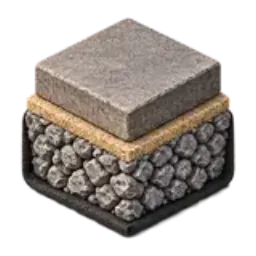
What sets this calculator apart is that a gravel driveway is a stacked system built for vehicle loads. A coarse sub-base spreads the weight and drains, a middle course ties it together, and a finer top course gives a tight surface that can be crowned to shed water and resist rutting. The total depth here is the sum of those compacted lifts, not one uniform scoop.
If you only need one of those layers alone, a different page fits better. The crushed stone calculator sizes a single base or drainage layer by size; the paver base calculator plans the base-and-bedding pair under pavers. Use this page when ordering the whole build and want the combined tonnage in one number.
Common mistakes
The biggest mistake is ordering loose volume with no compaction allowance and then finding the finished driveway too thin after packing. Another is treating square feet as cubic feet and ignoring depth entirely. A third is buying a single uniform stone for the whole depth instead of a coarse base under a finer top, which often makes the surface harder to keep level and tidy.
People also forget that a long driveway covers a lot of area, so small depth changes move tons quickly. Skipping a waste factor for edge spill, low spots, turnarounds, and grading loss tends to leave the order short. It is usually cheaper to round the delivery up a little than to pay a second delivery fee for a few missing yards.
Before you order
Bring the printed list, your driveway dimensions, and the layer plan to the supplier. Confirm the stone gradation for each layer, the density used for the ton conversion, and whether the price is per ton or per cubic yard. Ask about delivery minimums, truck access, and where the stone can be dumped relative to where it will be spread.
Keep the disclaimer with the list. This is a planning estimate, and local conditions vary. Subgrade strength, drainage, slope, frost, and traffic all affect how a gravel driveway should be built and how it holds up. For questions about whether a build will carry vehicle loads or meet local rules, consult a qualified professional before placing the order.
Common gravel driveway depth by layer (planning guidance)
| Layer | Typical depth | Coverage per cubic yard |
|---|---|---|
| Coarse base | 3 in | 108 sq ft |
| Middle layer | 2 in | 162 sq ft |
| Top course | 1 in | 324 sq ft |
| Total | 6 in | 54 sq ft |
Coverage per cubic yard equals 324 divided by depth in inches, using 1 cubic yard = 27 cubic feet. Depths are planning ranges, not an engineered design. Add compaction and waste.
Gravel Driveway Calculator FAQ
How do I calculate gravel for a driveway?
Multiply length by width to get square feet, multiply by total depth in feet for cubic feet, then divide by 27 for cubic yards. Add compaction and waste, then convert to tons using the supplier density.
How many tons of gravel do I need for a driveway?
Find cubic yards first, then multiply by density. At about 1.4 tons per cubic yard, a 100 square foot drive at 6 inches deep is near 1.85 cubic yards, or roughly 2.6 tons before compaction and waste.
How deep should a gravel driveway be?
A common planning total is around 6 inches, often split into a coarse base, a middle layer, and a finer top. Heavier use or soft subgrade may need more depth. This is planning guidance, not an engineering spec.
Why does the calculator add a compaction allowance?
Loose crushed stone settles when it is graded and driven on, so the finished depth is less than the loose depth. The compaction allowance adds extra material so the packed driveway reaches the depth you planned.
Should driveway gravel be ordered in layers?
Many gravel driveways use a coarse base under a finer top for stability and a smoother surface. You can estimate each layer separately by changing the depth, then add the results into one total order.
How much does a gravel driveway cost?
Bulk driveway stone runs roughly $25 to $60 per cubic yard, or about $15 to $45 per ton, before delivery, spreading, and grading. Multiply your cubic yards by a local price for a material estimate, then add delivery minimums and labor. The cost field here is a planning placeholder, not a quote.
Does this include grading, fabric, or drainage?
No. It estimates stone volume, tons, and a cost placeholder only. Add geotextile fabric, edging, culverts, grading labor, and drainage separately based on your actual site and supplier advice.
How this estimate is built
Formula
- Area = length x width.
- Cubic feet = area x total depth in feet.
- Compaction allowance is added before waste.
- Cubic yards = cubic feet / 27; tons = cubic yards x density.
Inputs and assumptions
Editable inputs include Area shape, Driveway length, Driveway width, Diameter, Base, Height, Outer diameter, Inner diameter, Total depth, Compaction allowance, Waste, Density, Bulk price. Defaults and calculation assumptions are listed in the Assumptions section and can be replaced with measurements or product-label data.
Sources and testing
Public density, coverage, package, and application references inform the defaults. Automated unit tests cover shared conversions and calculator logic; they do not validate site conditions, supplier labels, or project design.
Limits
Region, moisture, compaction, grading, waste, and supplier specifications can change the amount required. This is a planning estimate, not structural, safety, engineering, or professional construction advice.
Read the calculation methodology and sources and update policy.