Guide
How to measure your yard for materials
Every material estimate starts the same way: a measured area and a depth. This guide shows how to measure rectangles, L-shapes, curves, and circles, turn them into cubic yards, tons, or bags, and then pick the calculator that does the math for you.
The one formula behind every estimate
Almost every yard material — gravel, soil, mulch, compost, sand, stone — is ordered by volume. You get that volume from area times depth. Measure length and width in feet and multiply them for square feet. Choose a depth in inches and divide by 12 to turn it into feet. Multiply the square footage by that depth in feet to get cubic feet, then divide by 27 to get cubic yards, because one cubic yard is 27 cubic feet.
See a worked example
A 20 ft by 10 ft area is 200 square feet. At 3 inches deep, that is 0.25 ft of depth, so 200 multiplied by 0.25 is 50 cubic feet, or about 1.85 cubic yards before waste. Every calculator runs this chain with its assumptions shown.
Rectangles, L-shapes, and curves
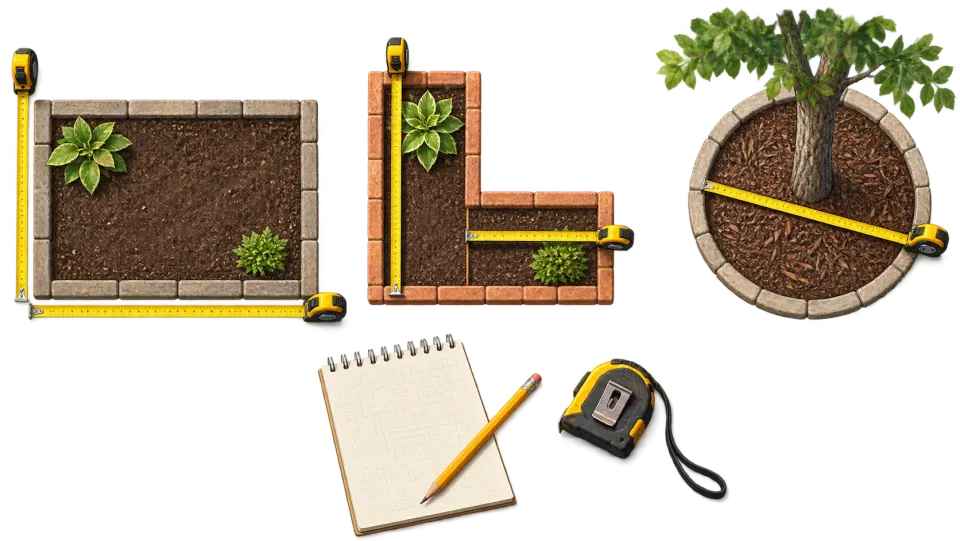
Real yards are rarely a clean rectangle. The reliable approach is to break the project into simple rectangles, measure each one, and add the areas together. An L-shaped patio is just two rectangles. A long bed that wraps a corner is two or three. Sketch it on paper, label the sides, and total the square footage before you touch a depth.
Measuring changing widths
For a path that changes width, use the average width. A walkway running from 3 feet wide to 5 feet wide can be measured as 4 feet wide. Add a slightly higher waste allowance for organic, curving shapes than for a tight, edged rectangle.
Circles, rings, and tree rings
A round patio or fire-pit area is a circle, and a circle's area is pi times the radius squared. The radius is half the diameter, so a 12 ft round area has a 6 ft radius: 3.14 times 6 times 6 is about 113 square feet. From there it is the same depth-to-volume chain as a rectangle.
How to subtract a tree ring
A ring is the big circle minus the small one. Measure the outer diameter and the inner trunk-side diameter, find both areas, and subtract the inner from the outer. That avoids buying mulch for ground you are not covering.
Turn area into a real material order
Volume is the start, not the finish. Depth choice matters: a decorative gravel or mulch layer on a prepared bed is often about 2 inches, a compacted gravel base is usually 3 to 4 inches, and paver bedding sand is a thin screeded inch. A small waste or compaction allowance covers uneven ground, spillage, and settling so you do not run short on the last stretch.
Bulk, tons, and bag conversions
Bulk gravel, soil, and stone are priced by the cubic yard or weighed by the ton, where tons equal cubic yards times material density. Bag counts depend on the volume printed on the label. Each calculator converts the order, adds waste, and builds a printable list.
Pick the calculator for your material
You have the measurement. Choose the material below and the calculator turns it into cubic yards, tons, bags, and a printable list with every assumption shown.
Patios, walls, paths & driveways
Hardscape, gravel & stone
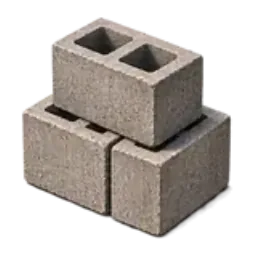 Concrete Block CalculatorCount wall blocks, mortar, openings, and waste.
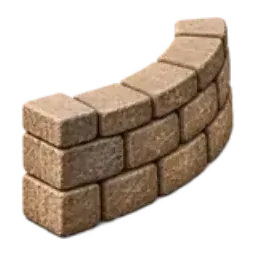 Retaining Wall Block CalculatorCount wall units, caps, base stone, and drainage gravel.
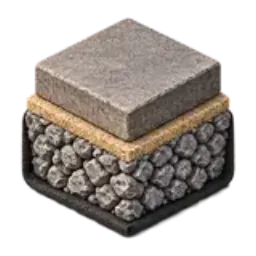 Paver Base CalculatorSeparate compacted base gravel from bedding sand.
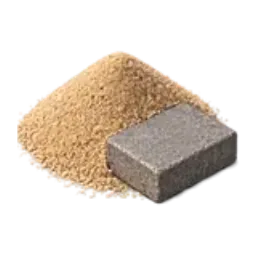 Paver Sand CalculatorEstimate bedding and joint sand for a paver area.
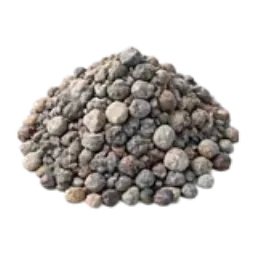 Gravel CalculatorEstimate general gravel volume, tons, bags, and cost.
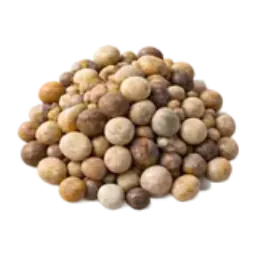 Pea Gravel CalculatorPlan rounded pea stone for paths, runs, and garden beds.
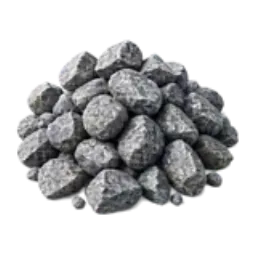 Crushed Stone CalculatorEstimate angular stone volume, tons, and compacted depth.
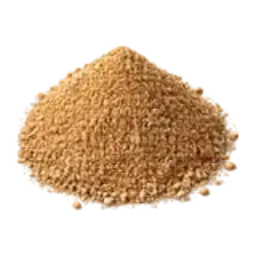 Decomposed Granite CalculatorPlan compacted DG for paths, patios, and fines.
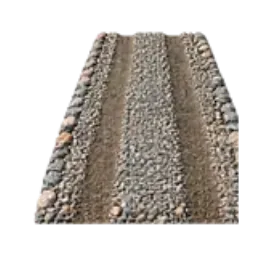 Gravel Driveway CalculatorPlan surface refreshes or full layered driveway stone.
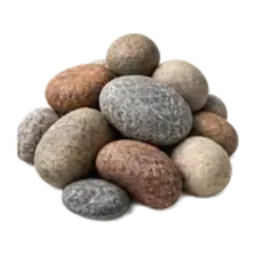 River Rock CalculatorEstimate larger rounded stone for swales and dry creek beds.
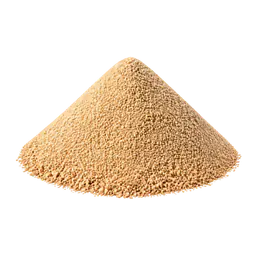 Sand CalculatorEstimate general sand volume, weight, bags, and cost.
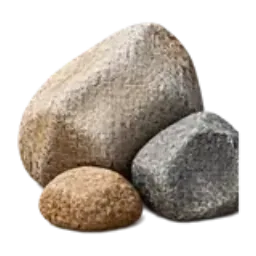 Landscape Rock CalculatorSize decorative rock by area, depth, and density.
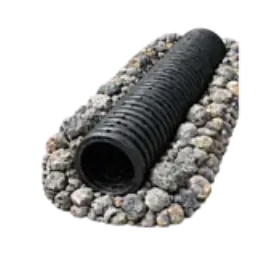 French Drain Gravel CalculatorCalculate trench stone around pipe and filter fabric.
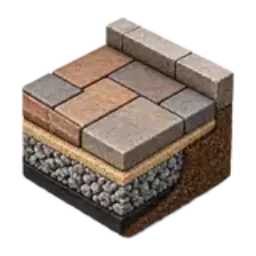 Paver Patio Project CalculatorPlan pavers, base, bedding sand, and joint sand together.
Beds, lawns, soil & compost
Soil, lawn & garden
 Topsoil CalculatorEstimate topsoil for lawn repair, leveling, and topdressing.
 Garden Soil CalculatorEstimate a soil blend for new beds and borders.
 Raised Bed Soil CalculatorFill raised beds with separate soil and compost volumes.
 Fill Dirt CalculatorSize rough grading, low spots, settling, and truck loads.
 Compost CalculatorPlan compost depth, yards, bags, and blend share.
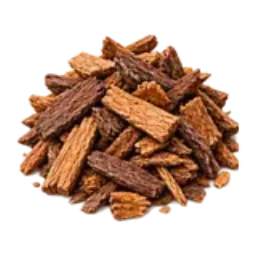 Mulch CalculatorEstimate bed coverage, cubic yards, and bag counts.
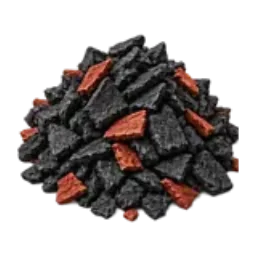 Rubber Mulch CalculatorPlan rubber mulch coverage by depth and package weight.
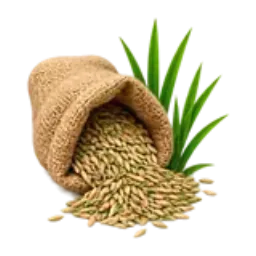 Grass Seed CalculatorCalculate seed from lawn area and seeding rate.
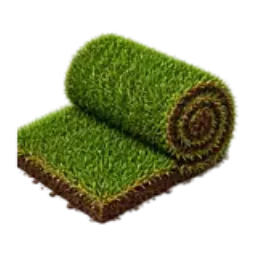 Sod CalculatorCount sod rolls or pallets from lawn area and waste.
Coverage, weight & package math
Conversions and reference tools
Measuring FAQ
How do I calculate how much material I need for my yard?
Measure the area in feet, choose a depth in inches, and multiply length by width by depth in feet to get cubic feet. Divide by 27 for cubic yards. Most yard materials are then sold by the cubic yard, by the ton, or in bags, so you convert that volume to whichever unit your supplier uses.
How do I measure an irregular or curved area?
Break the shape into simple rectangles, find each area, and add them together. For a path that changes width, use the average width — a strip that runs from 3 ft to 5 ft wide can be measured as 4 ft wide. Add a slightly higher waste allowance for organic shapes since loose material spreads past a soft edge.
How do I measure a circle or a tree ring?
A circle's area is pi times the radius squared, where the radius is half the diameter. A ring, like a mulched border around a tree, is the big circle's area minus the small inner circle's area. Measure the outer and inner diameters, find each area, and subtract.
How deep should the material be?
It depends on the material and the job: about 2 inches for decorative gravel or mulch on a prepared bed, 3 to 4 inches for a compacted gravel base, and a thin screeded inch for paver bedding sand. Each calculator shows a common planning depth and lets you change it.
How do I convert cubic yards to tons or bags?
Tons depend on the material's density: multiply cubic yards by a tons-per-cubic-yard figure (often around 1.3 to 1.5 for gravel, sand, and soil). Bags depend on the bag size printed on the product. The calculators do both conversions and round bag counts up so you do not come up short.