Free calculator
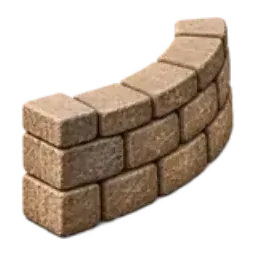
Retaining Wall Block Calculator
Use this retaining wall block calculator to turn wall length, height, block face size, cap length, waste, leveling base depth, and block price into a planning material list for a segmental (interlocking, mortarless) landscape wall. It returns wall face area, block count, courses, cap blocks, leveling pad gravel in cubic yards and tons, and a rough material cost to take to a supplier.
Open calculatorEstimatePlanning estimate only; not a structural, drainage, or permit calculation, and local soil, height, and code conditions vary, so consult a qualified professional or engineer for structural or safety questions.
Project inputs
Estimate
84 retaining wall blocks
A 20 ft by 3 ft wall face needs about 84 wall blocks in 6 courses, plus about 14 cap blocks and 0.37 cubic yards of leveling base.
Order and transport check
Supplier basis0.37 cu yd
Bagged optionUse supplier package yield and round to whole units
Pickup or deliveryConfirm vehicle payload, supplier minimums, moisture, and delivery access before ordering.
Printable material list
Estimate- Retaining wall blocks84 blocks5% waste included
- Cap blocks14 capstop course; adhesive set separately
- Leveling pad gravel0.37 cu yd6 in deep, about 1 ft wide
- Leveling pad by weight0.56 tons1.5 tons/cu yd assumption
- Drainage backfill stoneplan separatelyfree-draining stone behind the wall
- Block cost placeholder$378.00$4.5/block assumption
Estimate only. Retaining walls hold soil and can require engineered design, drainage, geogrid reinforcement, base preparation, setback, and permits. Consult a qualified professional for structural or safety questions.
EstimatePlanning estimate only; not a structural, drainage, or permit calculation, and local soil, height, and code conditions vary, so consult a qualified professional or engineer for structural or safety questions.
Assumptions
- Default block face is 18 in wide by 6 in tall, or 0.75 square feet of wall face per block.
- Default wall is 20 ft long and 3 ft tall, with caps 18 in long and a 5 percent waste allowance.
- Leveling pad gravel assumes a trench about 1 ft wide at the default 6 in base depth, at 1.5 tons per cubic yard.
- Block price defaults to $4.50 each as a planning placeholder, not a quoted supplier figure.
Calculation details
- Wall face area = length x height.
- Block count = face area / one block face area, plus waste, rounded up.
- Courses = wall height / block height; caps = wall length / cap length.
- Leveling base = wall length x about 1 ft wide x base depth in feet.
Calculator guideDepth, measuring, formulas, and common mistakes7 practical sections for this material
What this segmental wall estimate includes
This calculator is for segmental retaining wall (SRW) blocks: interlocking, mortarless landscape units with a lip or setback, sold by face coverage, like Allan Block, Versa-Lok, and Pavestone styles. It divides wall face area by the face of one block, adds waste, rounds up, then estimates courses, cap blocks, and the leveling pad gravel under the first course.
Treat every number as a planning estimate. A retaining wall holds back soil and is load-bearing, so block count is only the visible part of the job. This page does not size the base, set the setback angle, decide drainage, specify geogrid, or judge height limits. If the wall is tall, holds a slope, or carries a load, use the list only to prepare questions for a qualified professional or engineer.
Formula used
Wall face area is length times height. One block face is width over 12 times height over 12, in square feet. With the 18 in by 6 in defaults that is 1.5 ft by 0.5 ft, or 0.75 sq ft. Block count is face area divided by block face, plus waste, rounded up. A 20 ft by 3 ft wall has 60 sq ft, so 60 over 0.75 is 80 blocks, and 5 percent waste lands at about 84.
Courses equal wall height in inches over block height: 36 over 6 is 6 courses. Caps equal wall length in inches over cap length: 240 over 18 is about 14. Leveling pad gravel is wall length times roughly 1 ft of trench width times base depth, so 20 by 1 by 0.5 ft is 10 cubic feet, about 0.37 cubic yards, or near 0.56 tons at 1.5 tons per cubic yard.
How to measure the wall
Measure finished wall length along the face in feet, following each straight run and adding them. For curves, walk a tape along the centerline rather than across the chord, since a curve uses more block. Enter the planned finished height from the top of the leveling pad to the top of the caps, not the height of the dirt you are cutting into.
If the wall steps up a slope, exposed height changes along its length. Use an average height for a quick number, or split the wall into sections of similar height and add the lists for a closer one. Remember the buried first course: the bottom block usually sits below grade, so the count covers more height than you will see once the wall is backfilled.
Leveling pad and drainage gravel
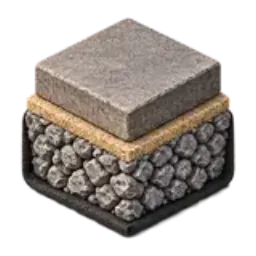
Segmental walls sit on a compacted gravel leveling pad, not a poured footing, and that pad gravel is what this tool estimates. The default assumes a trench about 1 ft wide at 6 in deep, a common start for a short wall. Wider blocks, taller walls, and softer soils often need a deeper or wider base, so adjust the depth input and confirm trench width against the block maker's instructions before you buy.
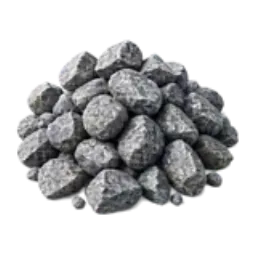
Pad gravel is separate from the free-draining backfill behind the wall and any drain pipe at the base, and those are not in this estimate. For the angular base and backfill stone, size that volume with the crushed-stone calculator, and price gravel by the ton or cubic yard at your supplier, since coverage and weight vary by stone and moisture.
Common mistakes
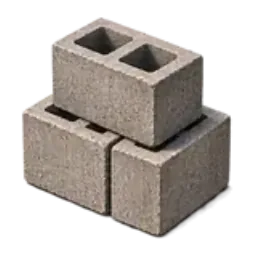
The most common mistake is treating an SRW block like a mortared concrete or cinder block. These units are dry-stacked with a built-in setback and no mortar, so do not order mortar bags or run them through the concrete block calculator. The second is mixing area and volume: wall blocks come from face area, while leveling pad gravel is a volume, so they use different math and units.
Other errors include forgetting the cap row, skipping waste on cuts and curves, and ignoring buried courses. Caps are an extra row glued on with masonry adhesive and counted separately here. A zero waste factor leaves you short on a curved or stepped wall, and measuring only the visible height undercounts the block, since the base course sits below grade.
When you need a professional
Many block makers and local rules treat walls above a set exposed height, often around 3 to 4 ft, as engineered structures. Past that, walls usually need designed geogrid reinforcement, a specified setback, deeper base prep, drainage details, and a permit. Tiered walls, walls holding a driveway or pool, and walls below a slope add load a face-area count cannot capture, and this tool does not decide any of it.
Use the printed list to scope material and budget, then bring it to a qualified professional or engineer for the structural decisions. Ask about base depth and width, block setback, reinforcement spacing and length, drainage stone, drain pipe, and backfill compaction. Local soil, frost depth, water, and code all shift the design, so confirm the plan before you commit to a height.
Use the right calculator
This page is only for segmental retaining wall block estimated by face coverage. For a mortared wall built from standard 8x8x16 concrete masonry units or cinder block laid with mortar joints, use the concrete block calculator instead, which estimates blocks, mortar bags, and core fill. The two systems use different blocks, math, and installation, so the counts are not interchangeable.
For the materials around the wall, lean on the related tools. Size the angular base and free-draining backfill stone with the crushed-stone calculator, plan a compacted setting layer with the paver-base calculator, and estimate driveway surfacing with the gravel-driveway calculator.
Segmental wall blocks and base gravel by wall size (18 in x 6 in face, 6 in base)
| Wall size (L x H) | Wall blocks (+5% waste) | Leveling pad gravel |
|---|---|---|
| 10 ft x 2 ft | 28 blocks | 0.19 cu yd / 0.28 tons |
| 20 ft x 2 ft | 56 blocks | 0.37 cu yd / 0.56 tons |
| 20 ft x 3 ft | 84 blocks | 0.37 cu yd / 0.56 tons |
| 30 ft x 3 ft | 126 blocks | 0.56 cu yd / 0.83 tons |
| 40 ft x 4 ft | 224 blocks | 0.74 cu yd / 1.11 tons |
Each block covers 0.75 sq ft of wall face. Gravel assumes a 1 ft wide trench at 6 in depth and 1.5 tons per cubic yard. Caps, drainage stone, backfill, and reinforcement are not included.
Retaining Wall Block Calculator FAQ
How many retaining wall blocks do I need?
Divide wall face area, which is length times height, by the face area of one block, then add waste and round up. With the default 18 in by 6 in block, each covers 0.75 sq ft. A 20 ft by 3 ft wall is 60 sq ft, so it needs about 80 blocks plus 5 percent waste, or roughly 84. Cap blocks are counted separately.
How is the block face area calculated?
Block face area is width over 12 times height over 12, converting inches to feet. The default 18 in by 6 in block is 1.5 ft by 0.5 ft, or 0.75 square feet. If your block has a different exposed face, change the width and height inputs so the count matches the unit you buy.
How many cap blocks do I need?
Caps run along the top in a single row. The calculator divides wall length in inches by cap length, then rounds up. For a 20 ft wall with 18 in caps, that is 240 over 18, or about 14 caps. Caps are set with masonry adhesive rather than dry-stacked, so plan on a tube of adhesive too.
How much gravel goes under a retaining wall?
Segmental walls sit on a compacted gravel leveling pad. The default assumes a trench about 1 ft wide at 6 in deep, so a 20 ft wall is 20 by 1 by 0.5, or 10 cubic feet, about 0.37 cubic yards or near 0.56 tons at 1.5 tons per cubic yard. This is base gravel only, not drainage stone.
Is this the same as a concrete block calculator?
No. This tool is for segmental retaining wall blocks: interlocking, mortarless landscape units sold by face coverage. For a mortared wall built from standard 8x8x16 concrete masonry units or cinder block, use the concrete block calculator instead, since it adds mortar bags and core fill. The two systems use different blocks and math, so do not swap the counts.
Can I build a tall retaining wall from this estimate?
Treat this as an estimate only. Walls above roughly 3 to 4 ft of exposed face, tiered walls, and walls holding a load often need engineered geogrid reinforcement, a specified setback, deeper base prep, drainage, and a permit, none of which this calculator decides. Consult a qualified professional or engineer for structural, drainage, and safety questions before committing to a height.
How this estimate is built
Formula
- Wall face area = length x height.
- Block count = face area / one block face area, plus waste, rounded up.
- Courses = wall height / block height; caps = wall length / cap length.
- Leveling base = wall length x about 1 ft wide x base depth in feet.
Inputs and assumptions
Editable inputs include Wall length, Wall height, Block face width, Block face height, Cap length, Waste, Leveling base depth, Block price. Defaults and calculation assumptions are listed in the Assumptions section and can be replaced with measurements or product-label data.
Sources and testing
Public density, coverage, package, and application references inform the defaults. Automated unit tests cover shared conversions and calculator logic; they do not validate site conditions, supplier labels, or project design.
Limits
Region, moisture, compaction, grading, waste, and supplier specifications can change the amount required. This is a planning estimate, not structural, safety, engineering, or professional construction advice.
Read the calculation methodology and sources and update policy.